Monday, May 2, 2011

There's Music on the Net and I Have to Get it Out

One area that has been completely redefined by the internet yet not really mentioned in class is music and the music industry.  While TV may have killed the radio star, by allowing bands to share music and advertise online there is more variety in music available today than perhaps ever before.  Bands such as Ok Go owe their sucess to the nature of viral videos.


As a musician, I find the internet as an excellent tool for various aspects of creativity.  Sites such as Pandora Radio are great for listening to a variety of music, Myspace has come to redefine itself as a place for band to create profiles and share music, and sites such as iTunes have become the primary sellers of music to people.  One thing in particular that I like is the availability of guitar tabulature and sheet music.
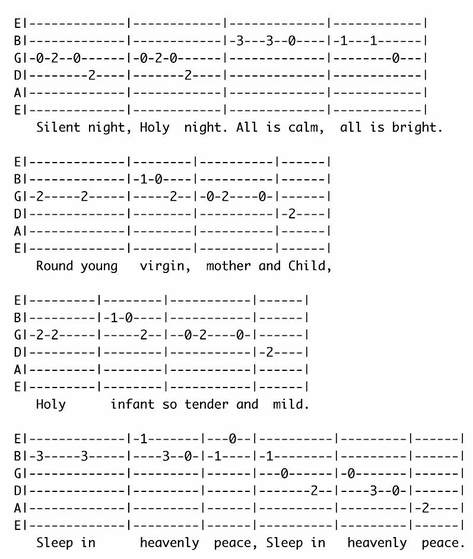

There is a great variety of tools and services available for musicians.  While there was, and has been much concern over the state of the music industry it has become more apparent that the internet has, more than anything, helped musicians than hurt them.  It is easier today to advertise and sell music than ever before, the creative tools available are staggering, and people can collaborate on projects acorss continents.  It is a bright, musical future for us.

Sunday, May 1, 2011

Calling all Friends, Calling all Friends

People have been using creative ways to rally each other since the dawn of time.


As the internet has proliferated the lives of many a citizen  of the world, a new form of activism has emerged.  Using social media such as Facebook, demonstrations can be planned, organized, shared, collaborated, and executed on a scale impossible before the tools of social networking.  A flash mob is one such example.


According to Wikipedia a flash mob is "a group of people who assemble suddenly in a public place, perform an unusual and sometimes seemingly pointless act for a brief time, then disperse, often for the purposes of entertainment and/or satire."  By most definitions a flash mob is harmless.  The intent is purely for amusement and entertainment. 


Yet this is not the limits of social media.  Protesters in Egypt were able to organize groups of thousands primarily using social media and text messages to stage simultaneous protests across the country in January.  The government cut off all internet connections in response to this.  The effect was an almost immediate cutoff of all information flowing to and from Egypt.  New stations around the globe were in the dark as to the events of the country, and speculation was rampant.  However, the internet shutdown might have helped facilitate the end of president Mubarak.  Crowds swelled as outrage grew.  This is probably one of the first cases of an revolution precipitated by the use of the internet.  It is a brave new world to see how such a form of mass communication will be used for political purposes in the years to come.

Wednesday, April 27, 2011

Journalism

Journalism is the practice of investigation and reporting of events, issues, and trends to a broad audience. Although there is much variation within journalism, the ideal is to inform the citizenry. Besides covering organizations and institutions such as government and business, journalism also covers cultural aspects of society such as arts and entertainment. The field includes jobs such as editing, photojournalism, and documentary.


 Unmentioned in this article is the intent of journalism.  While Wikipedia may do a good job of describing what journalism is, and at least the ideal of what it is, journalism seldom lives up to this ideal


A goal of any media is for it to be viewed.  While most networks do a good job of informing, it is selective and many times trivial compared to more important, but less easily televised issues as President Obama complained today in a press release.


The point is that there are two components to journalism: the ideals and dictionary definitions, and the actual "business" of journalism.  What makes an informed citizen is someone who understand media agenda and bias, and is willing to investigate issues on their own.  This is what media literacy is about.

Just a Movie

Is anything just anything?  It is human nature to analyze things but there isn't always meaning there.  A great example is the show Lost, which often uses plot devices episodes back to lead on the the next arc, and at the same time will throw in red hearings and seemingly significant details for nothing.


The difference is that movies are only on average two hours long.  Each detail is combed over for effect. I recently watched the film Source Code.


Without giving away too much of the plot there are several details that are specifically put in place to help tell the story.  There is a capsule, which malfunctions and helps show the frame of mind of the main character.  As a movie that goes back to the same point in time, every detail and event is repeated dozens of times in several takes.  It is amazing when you think about it how how the continuity is kept in tact while still progressing the story.  Small details are later investigated, leading to the crux of the plot.


One thing that being "just a movie" is about are moral implications.  Many an action hero has gone on essentially murderous rampages yet because this person is a "hero" it's somehow OK.  There is one controversial decision made in Source Code that has received media attention fairly recently.  A character is found in a vegetative state, and a decision is made whether to pull the life support.  This is a case where a moral argument, where some thing is  a little more than a movie is present.


There is no such thing as an uncontroversial thing.  Every decision, every action is a choice, and for each there is a moral statement made.  Movies portray characters making choices, and often there is a reason for it all, there is almost always a point, some obvious, some buried.  From the stories of the bible to Aesop's fables storytelling has always had a moral component.  Morals commentary and connotations are simply the nature of the beast in movies, or anything else.

Sunday, April 17, 2011

Don't Judge a Book by It's Webpage

Go read a book.  No really, read a book.  Try some Tolkien or "Treasure Island" for a change.  Dr. Sues doesn't count.  I'll be here when you get back.


Okay back?  Yeah I knew you weren't the type to listen to what people say anyways.  Moving on, Internet Literacy is a different animal than English literacy.  The internet was created for the very purpose of rapidly relaying information from one user to another.  This has permeated its design and function in every aspect.  By contrast a novel is to be digested


A short story, a poem, a book, or other piece of literature does not intend to convey information easily.  There are forms to be observed; rhyming, alliteration, dissonance, consonance, meter, etc.  There is a plot to be dissected, characters to analyze, hidden meanings to interpret, and allusions to find.  By all means, a book or a poem is not an easy thing.


In one these "book smarts" refer to a type of art: it is poignant, it is meaningful, it is controversial, and it is not easily understood by all, nor do they interpret it the same way.  It seems disingenuous at first to make this comparison, because at a certain level English skills (reading comprehension, grammar, syntax, writing, etc.) are truly essential for people to interact in our society.  But there is such a "higher English" that i am referring to: there is an art.  This perhaps is a small part of the controversy and may help many understand those people who simply "don't get" English and do not appreciate it.  It almost seems trite to say, "Art is never appreciated."


Thus in this context we understand the New York Times Article by Motoko Rich. There exists a sort of "literate elite" that abhors the thought of the garbage of internet speak and unorganized and the sporadic thought process of browsing.  They think that this new form of literacy won't help anyone understand Hemingway or Chaucer.  The truth is: they're right.


Any form of written or symbolic communication is literacy.  Yet as communication serves different functions, so does literacies.  An internet forum will not help an individual develop a comprehension of "Treasure Island" (unless of course it's a forum on comprehending "Treasure Island").  What the person is more likely to develop is rhetorical and interpersonal skills; he/she will learn how to reason, debate, and collaborate better with others in writing.  Something that has all but disappeared since the advent of television has begun to return, the written debate (I of course do not pretend that a majority of these "debaters" are rhetorical geniuses, rather the opposite in fact).  The internet serves a variety of functions that books cannot do to the very nature that the internet is more than just mere text, it is links, audio, pictures, text, and video.  Thus people have creatively utilized these capabilities to communicate with each other.


In conclusion, Internet Literacy is a new form, independent of the old form of written literacy.  Both are important, each uniquely in its own sphere.  Proper English skills are still very much valid in for an idividual to communicate and interact in a professional environment.  On the flip side, much of Internet literacy is an informal, or common, form of communication.  Increased internet usage does not cause a decrease in literacy as may be implied.  A better culprit would be our educational system, parents, and cultural standards (correlation does not imply causation).  No form of literacy shall disappear in the short, or even long term.  What we will see is a greater emphasis on Internet literacy and its function as communication, with acknowledgment of how it evolved from the old standards of written communication.

Tuesday, March 22, 2011

I'll Psych You Out in the End!

Everyone likes a good joke, or mystery, or drama, or crime, or romance, or obscure eighties and nineties references.  Well, for me at least, more of the latter.


Psych is a television show about the adventures (and often misadventures) of Shawn and his friend Gus.  After calling in a tip (for reward money) after viewing a newscast, Shawn is brought in for questioning by Carlton Lassiter, a hardball detective, who is convinced that Shawn must be involved with the crime he solved.  Shawn, who was trained by his father (a career cop) to be the perfect detective, using his hyper-observation and photographic memory to convince the authorities that he is in fact psychic. One 45 minute adventure (plus commercials) later, Shawn is running a psychic detective agency with his unwilling partner in crime, Gus.


There are various steroetypes and tropes present in the series, often for comedic effect.  Shawn Spencer is the classic screw up.  He's charming, brilliant, but lazy and unmotivated.  Burton Guster acts as the perfect foil to Shawn's inanity.  Gus is reserved, responsible, and a little stuck up and humorless at times.  There is a great cast of supporting actors too.  Juliet is a part time love interest part time fem fatal.  Carlton Lassiter is the egotistical, alpha male cop who is just as dedicated to his job as he is socially inept.  Shawn comes from the stereotypical divorced and dysfunctional family. His father is authoritarian and always disaproving of Shawn's actions.  After all, he spent all of his time trying to make Shawn follow his footsteps into being a cop, only to have Shawn rebel against him.  Shawn's mother is as brilliant as she is removed and distant.


One of the great things that the cinematography of the show captures is the back and forth of the characters.  As seen in the link, the focus of the camera is on the eyes.  This is before the viewer even realizes that they are engaged in  a staring contest.  The shifting back and forth between each person only raises the drama.  There are other various small touches that add up.  Close ups of fist bumps and other body language, shifting to a profile shot for the delivery of snide comments, and highlighting objects in a closeup that are key clues to the story.  There are several layers of self referential humor ("I solve a case about once a week and another around Christmas and Thanksgiving" -Shawn)  and running gags.


Overall what makes the show work is the quirky humor and the strength of the actors.